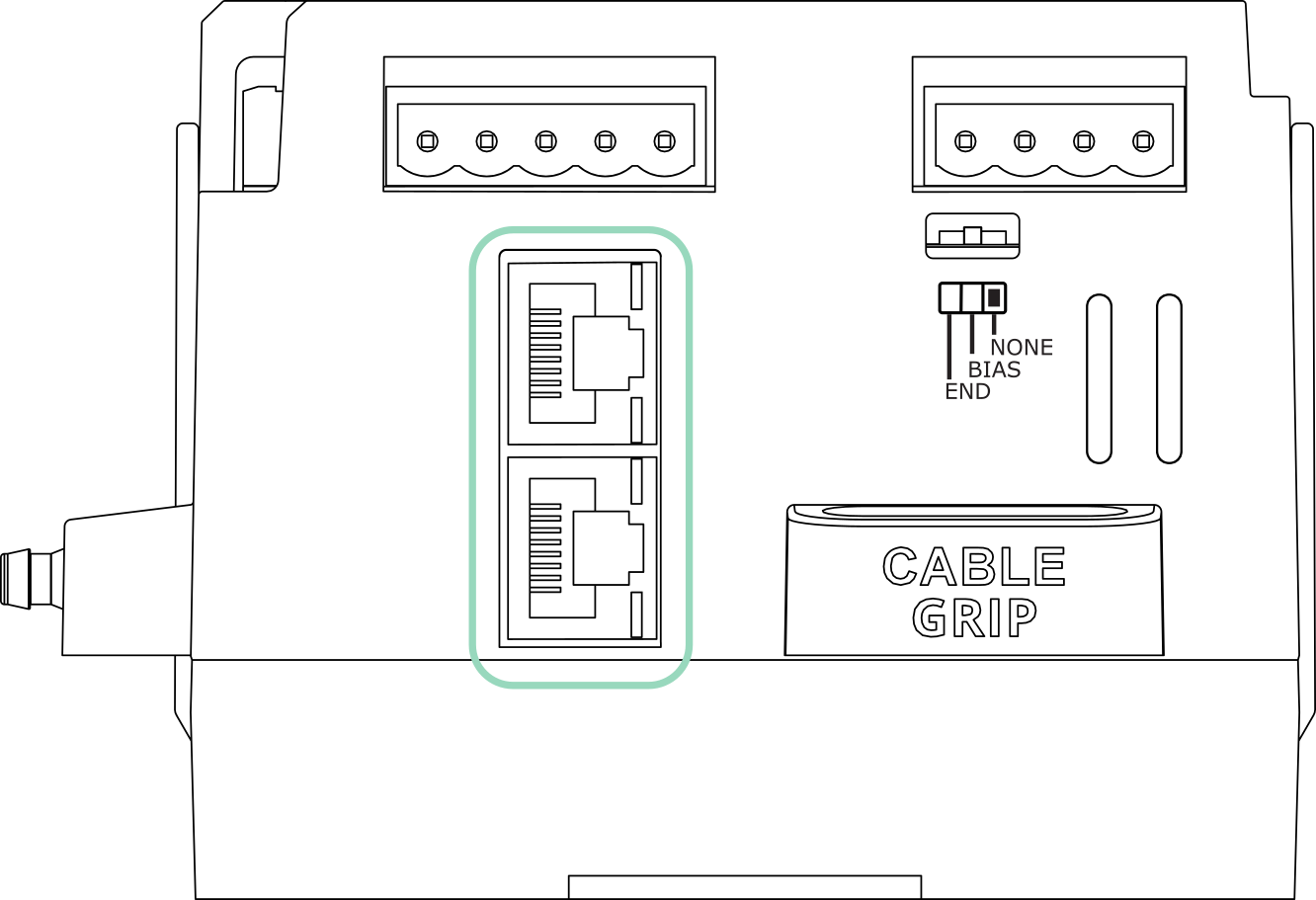
The VAV14-IP controller is equipped with two Ethernet ports operating in a switch mode, designed to connect controllers in a daisy chain mode without the need for additional hardware switches.
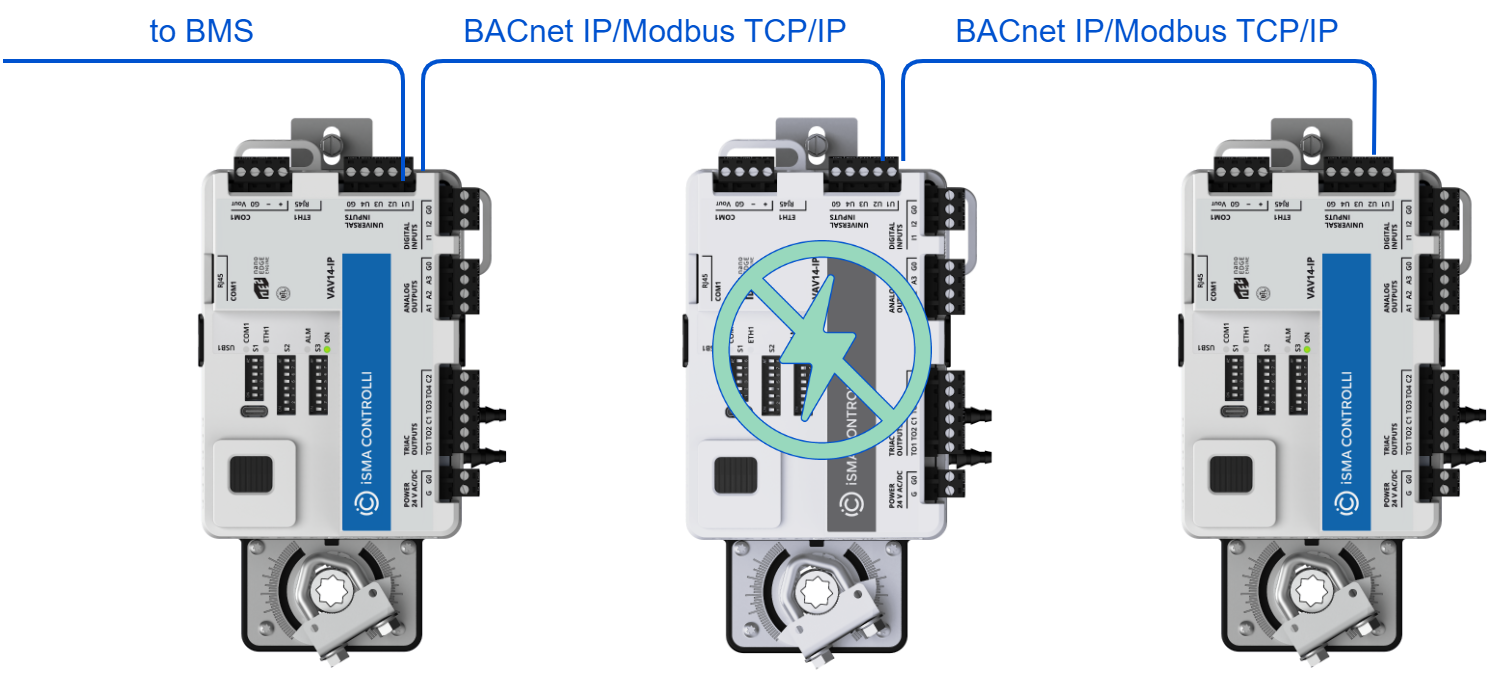
Due to the specifics of the Ethernet network daisy chain topology, the Ethernet ports of the VAV14-IP controllers are fail-safe protected, ensuring the communication continuity in such network topology. The transmission is maintained even if one of the controllers on the network is not being powered.
The fail-safe functionality allows the continuity of data transmission through the device, despite of possible power supply breaks. In normal conditions, the data packets coming in are sent through the switch, which ensures communication with further connected devices. However, if the VAV14-IP runs into power failure, thanks to the fail-safe mechanism, the communication between connected devices is upheld, and the data packets are still transmitted to the devices further in the network, ensuring the communication continuity. Devices that are not equipped with the fail-safe protection break the communication continuity in case of the power supply failure, despite of having a built-in switch. The mechanism ensures the Ethernet communication is not broken in any conditions.
Address Pool Consistency
The Ethernet IP interface can be used to connect the device to the computer network, which it will work in, or to the computer itself. If the device is connected to the computer network, make sure that the IP address of the device is in line with the address range of the computer network. In case it differs, the device first needs to be connected directly to the computer and have its IP address changed manually. In such case, the Ethernet TCP/IPv4 connection needs to be fixed manually, making sure that the device's network parameters (IP address, mask, and default gateway’s) are consistent with the Ethernet connection's address pool.
Ethernet Network Cable Length Requirements
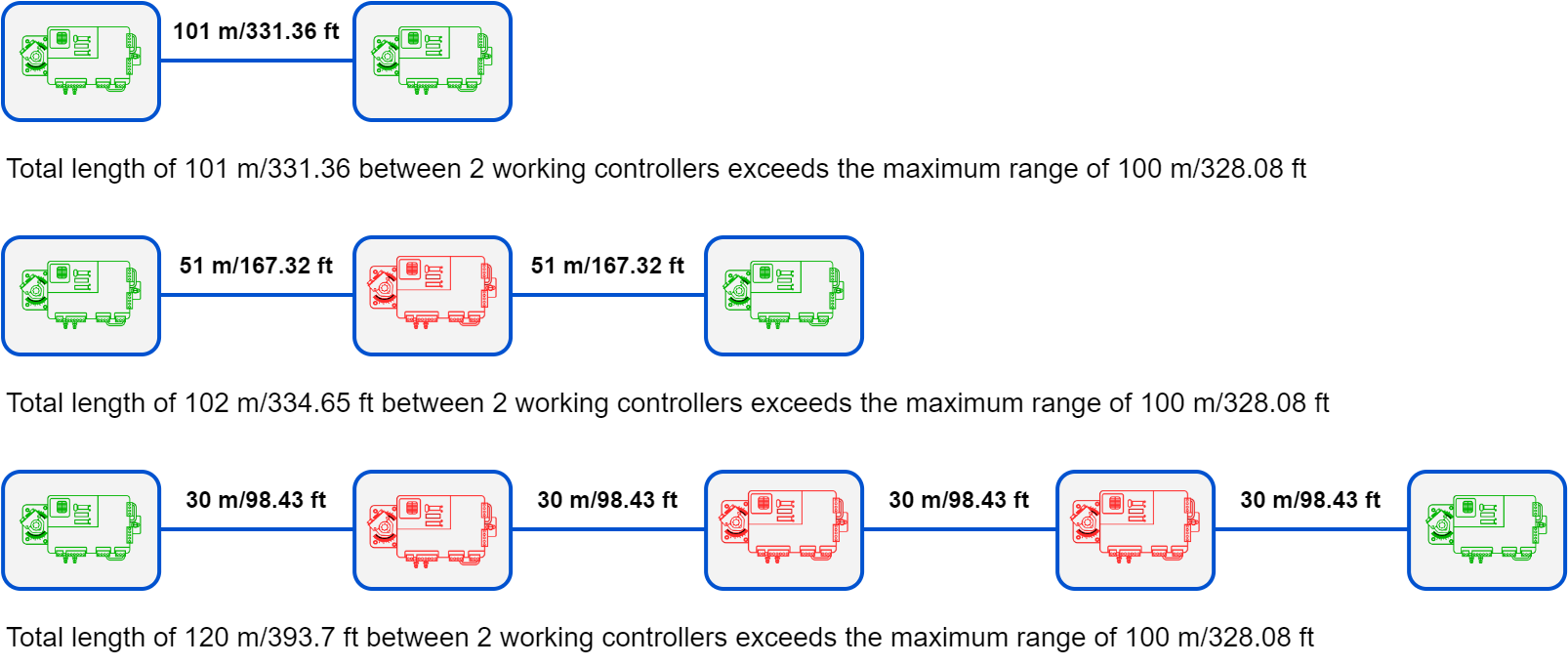
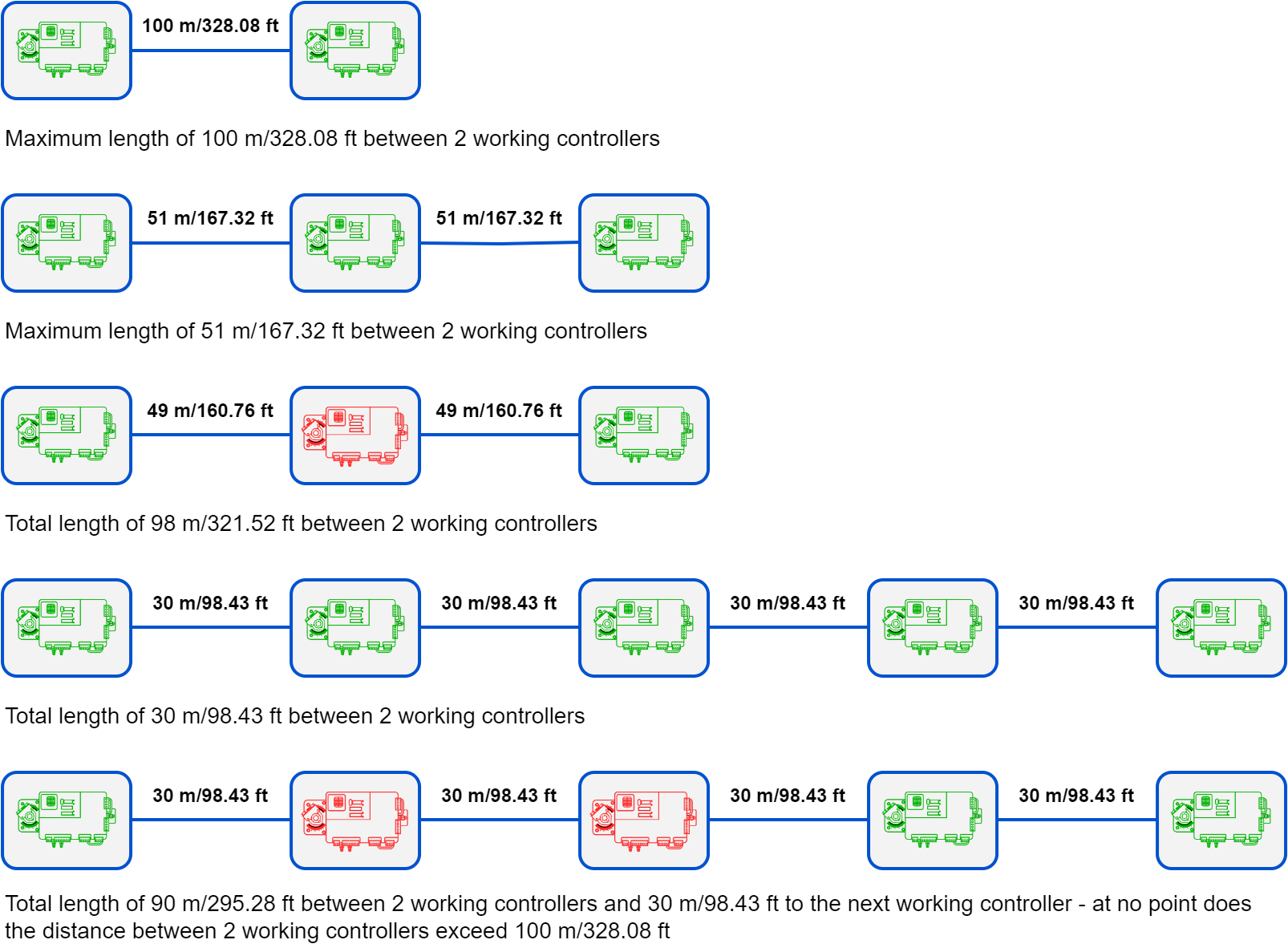
According to the Ethernet Cat5 cabling standard, the maximum distance between 2 Ethernet devices cannot exceed 100 m/328.08 ft. A total cable length between 2 communicating devices on the network cannot exceed 100 m/328.08 ft. If there are devices on the network, which have lost communication, the maximum cable length between next two working controllers still cannot exceed 100 m/328.08 ft. The below diagrams depict possible scenarios for correct connections and scenarios, where the cabling length exceeds the allowed limits.
Minimum cable category: UTP 5E.
Examples of a proper fail-safe protection in daisy chain connections
For daisy chain connections, the maximum length between 2 working controllers must not exceed 100 m/328.08 ft. In the diagram below, green icons represent working controllers on the network, and red icons represent controllers, which are not communicating:
Examples of an inadequate fail-safe protection in daisy chain connections
For daisy chain connections, the maximum length between 2 working controllers must not exceed 100 m/328.08 ft. In the diagram below, green icons represent working controllers on the network, and red icons represent controllers, which are not communicating: